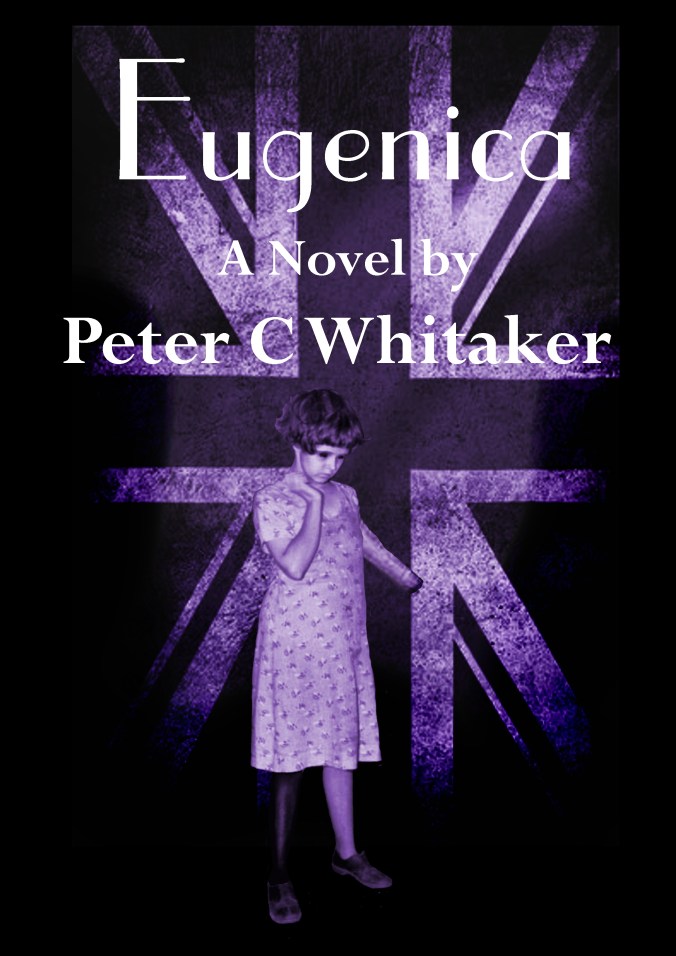
It was not a surprise that so many people took advantage of my free book giveaway, certainly in respect of the historical fiction novels. Those books have always proved popular. The big surprise though is Eugenica. I have always found it difficult to get this book a readership, but this week has gone very well. In fact, several people who downloaded the book have already been in touch. It is always a pleasure to talk to readers for me, even more so when the subject is this particular novel.
One of the commonest reactions to Eugenica is an admission that the reader did not know that historical figures like Winston Churchill or Theodore Roosevelt were supporters of the eugenics movement. There are a lot more. My research into eugenics in the early 20th century revealed a surprising array of people. Of course, such a revelation today carries with it a degree of negativity. This is because most people’s awareness of the subject is limited to the Third Reich. That was not eugenics, it was dysgenics, the very negative form of the social betterment ideal that Sir Francis Galton originally envisioned. When I wrote the book, I adopted a non-judgemental approach to these historical characters. Eugenics was a product of its time. It was based on false scientific principles, that is true, and it was twisted into something evil, but I doubt that the majority of original supporters of eugenics had such a nightmare vision in mind when they joined their respective eugenics society.
Another popular comment relates to how dark the book is. I admit, the fictional Ministry of Social Biology is instituting dysgenic policies into Britain. The Spring Bank facility is a concentration camp in all but name. Every man, woman, and child that fails to match the eugenic ideal is being rounded up and hidden away from the rest of the world. Clearly, this is not fantasy, these things have happened. Listening to the way some politicians around the world talk today it does not seem that much of a stretch of the imagination to see such policies coming back into favour. Here in Britain people with disabilities have been the target of an unremitting campaign to rid them of both public sympathy and their benefits. Mostly, it has worked. Britain is not a nice place to be if you are disabled.
At its heart Eugenica is a story about the triumph of the human spirit in the face of adversity. It has to descend into darkness in order to make the light seem all that more special. It is also necessary to illustrate the fact that not all human beings are cold, insensitive, and lacking in compassion. There are enough people out there who do care about others as to make life worthwhile. They are also not always the people that you expect to possess such empathy.
Giving this book away for free was all about exposure. It is an attempt to breakdown the wall of resistance to the idea that the disabled could ever be heroes in their own story. Of course, it is not really their own story, it is everyone’s story. Every human story involves every human being, even if they do not know it. Grace and Tom are human beings first, disabled second. Their respective disabilities are inherently part of each of them, but so is their humanity. People often seem to forget that.
Eugenica is a challenging read, but not in the way it is written. Technically, it is quite straightforward. It is the subject-matter that is challenging. The very worst in humanity is challenged by four young people with disabilities, a very unlikely group of protagonists. They are not pretty. They might not be instantly likable. I know that some people even feel a revulsion for the disabled, but therein lies a part of the challenge. For me, as the writer, I had to find ways to illustrate how disabled people find ways to cope with things that the able do not even stop to think about. It was important to represent them as ultimately positive characters. They are not dependent on sympathy or pity. They do not stand or sit around waiting to be saved. Grace, Tom, Mary, and Hector save themselves and then they attempt to save others. They are worthy of being called heroes.
If you think that you can meet the challenge of reading a book like Eugenica then why not click on the link below, before midnight tomorrow, and download a free copy? Go on, I dare you!
 Peter C Whitaker